Mushroom Processing & Value Addition
Turn fresh mushrooms into year-round income
What you'll learn
Upcoming dates
New dates coming soon — check back shortly.
No dates scheduled yet — be the first to know
Tell us you're interested and we'll message you on WhatsApp the moment the next batch is announced, with the link to register.
No payment is taken and no seat is held — we simply call you first.
What you'll cover
1. Day 1 · Session 1 (9:00–10:30 AM): Introduction to Mushrooms
Trainer: Priyanshu Kulshrestha
- History and importance of mushrooms in India and globally
- Biology of mushrooms (Life cycle: Spore → Mycelium → Fruiting body)
- Nutritional and medicinal value
- Current market scenario and demand in India (fresh, dried, value-added)
- Types of mushrooms: Edible, Medicinal and Poisonous (basic identification)
2. Day 1 · Session 2 (10:45 AM–12:30 PM): Substrate & Compost in Mushroom Cultivation
Trainer: Priyanshu Kulshrestha
- Importance of substrate and compost in mushroom cultivation
- Raw materials used (paddy straw, wheat straw, sawdust, bagasse, etc.)
- Step-by-step compost preparation (Long method and Short method)
- Pasteurization vs Sterilization techniques
- Preparation of different compost formulas
- Live demo: substrate soaking, chopping and pasteurization
3. Day 1 · Session 3 (1:30–3:15 PM): Compost & Substrate for Different Mushroom Varieties
Trainer: Priyanshu Kulshrestha
- Compost for Button Mushroom (Agaricus bisporus)
- Substrate for Oyster Mushrooms (Pleurotus spp.) — straw based
- Sawdust-based substrate for Shiitake, Lion’s Mane and Reishi
- Formulations for Cordyceps, King Oyster and Milky Mushroom
- Factors affecting substrate quality (C:N ratio, moisture, pH)
- Low-cost local alternatives
- Practical: participants prepare small substrate bags
4. Day 1 · Session 4 (3:30–5:00 PM): Spawn Introduction & Inoculation
Trainer: Priyanshu Kulshrestha
- What is spawn? Importance of high-quality spawn
- Types of spawn (Grain spawn, Sawdust spawn)
- Spawn production process (Mother culture → Master spawn → Finishing spawn)
- PDA (Potato Dextrose Agar) preparation and tissue culture basics
- Sorghum / wheat grain spawn production (hands-on)
- Maintaining pure culture and avoiding contamination
- Practical: participants inoculate grain spawn under supervision
5. Day 2 · Session 5 (9:00–10:45 AM): Infrastructure & Environment Control
Trainer: Sandeep Kumar
- Low-cost infrastructure designs (Room, Shed, Polyhouse, Basement)
- Fruiting room design and requirements
- Environmental parameters: Temperature, Humidity, Fresh Air Exchange (FAE), Light
- Incubation room setup and management
- Harvesting techniques — when, how and how much to harvest
- Practical / demo: visit to model mushroom unit
6. Day 2 · Session 6 (11:00 AM–12:30 PM): Pest and Disease Management
Trainer: Vinay Sharma
- Common contaminants (Trichoderma, Aspergillus, Bacterial blotch, etc.)
- Prevention & control methods (sanitation, chemical and biological)
- Major pests (flies, mites, nematodes)
- Integrated Pest & Disease Management (IPDM) systems
- How to save a contaminated batch (recovery techniques)
- Practical: identifying contaminants under the microscope + management demo
7. Day 2 · Session 7 (1:30–3:00 PM): Processing and Value Addition
Trainer: Priyanshu Kulshrestha
- Post-harvest handling and storage of fresh mushrooms
- Drying methods (sun drying, cabinet dryer, dehydrator)
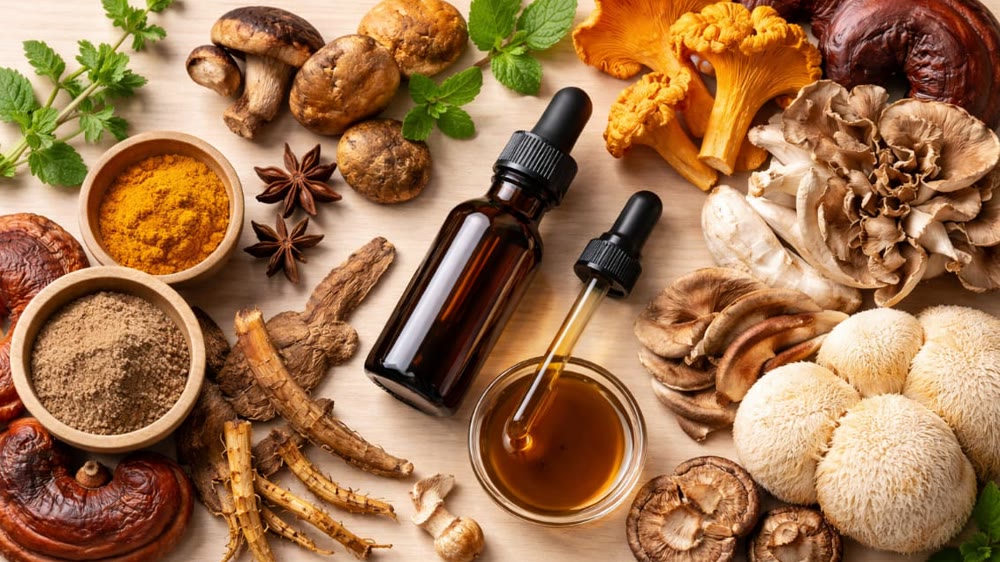
- Value-added products: powder, pickle, soup powder, tinctures/extracts
- Packaging techniques for longer shelf life and market appeal
- Recipes and product development (mushroom sweets, snacks, etc.)
- Practical / demo: drying process + simple value-added product making
8. Day 2 · Session 8 (3:15–5:00 PM): Economics, Marketing & Subsidies
Trainer: Sunil Kumar Sharma
- Cost economics of small-scale (200–500 sq ft) and medium-scale units
- Expected yield and income calculations (Button, Oyster, Specialty)
- Marketing strategies: local market, hotels, supermarkets, online, farmers markets
- Branding and selling grow kits
- Government schemes and subsidies (NHM, MOFPI, NABARD, State schemes)
- Loan and grant opportunities for mushroom entrepreneurs
- Success stories of mushroom farmers in India
Meet your trainers
Priyanshu Kulshrestha
Priyanshu Kulshrestha brings strong scientific and technical expertise in mushroom cultivation and biological sciences. He focuses on practical methods, quality control, and innovative, sustainable approaches as a dedicated instructor in the training programs.
Sandeep Kumar
Sandeep Kumar is an expert in optimizing precise microclimates — controlling temperature, humidity, and airflow for consistent, high-yield mushroom production.
Vinay Sharma
With over 20 years in business development and 7+ years of hands-on expertise in mushroom cultivation, Vinay Sharma specializes in practical farming techniques, spawn management, quality control, and commercial mushroom production.
Sunil Kumar Sharma
Sunil Kumar Sharma specializes in technology-enabled mushroom cultivation and IoT-driven farming solutions, providing hands-on guidance for scalable, high-yield commercial mushroom production.
Frequently asked questions
Do I need any experience to attend?
No. The workshop starts from the basics with plenty of hands-on practice — beginners are welcome.
Where is the training held?
At our CHHATRAKA training center in Jaipur — 84/121, Pratap Nagar, Jaipur, Rajasthan 302033. Directions are also sent when you book.
Will I get a certificate?
Yes — a verifiable certificate of participation after you complete the workshop.
What should I bring?
Just yourself and a notebook. Materials for the practical sessions are provided at the center.
2-day in-person workshop
New dates coming soon — check back shortly.
Book your seatHands-on, in-person training at our center. Pick a date below and book your seat.
What's included
- Breakfast, tea & lunch
- Certificate of participation